A new Report for the EU-funded Fosterlang project conducted by the European Language Equality Network (ELEN) analyses how social media and young content creators are contributing to the visibility and normalisation of minoritised languages online.
Social media have become an increasingly relevant space for the use, visibility and normalisation of minoritised languages in Europe. The new report analyses the role that young speakers and content creators are playing in this new digital ecosystem.
The report, entitled “Social Media Use and Practices of Young Speakers of Endangered and Minoritised Languages”, by Davyth Hicks and content creator Blanca Trull from ELEN, explores the experiences and practices of young people who use minoritised languages on social media and analyses the opportunities and challenges posed by the digital environment for these linguistic communities.
A report built from the voices of young content creators themselves
One of the distinctive aspects of this study is that it does not analyse the role of young people in the revitalisation of minoritised languages without taking their own perspective into account, but rather, the report’s conclusions directly incorporate the experiences and opinions of young content creators from different European linguistic communities.
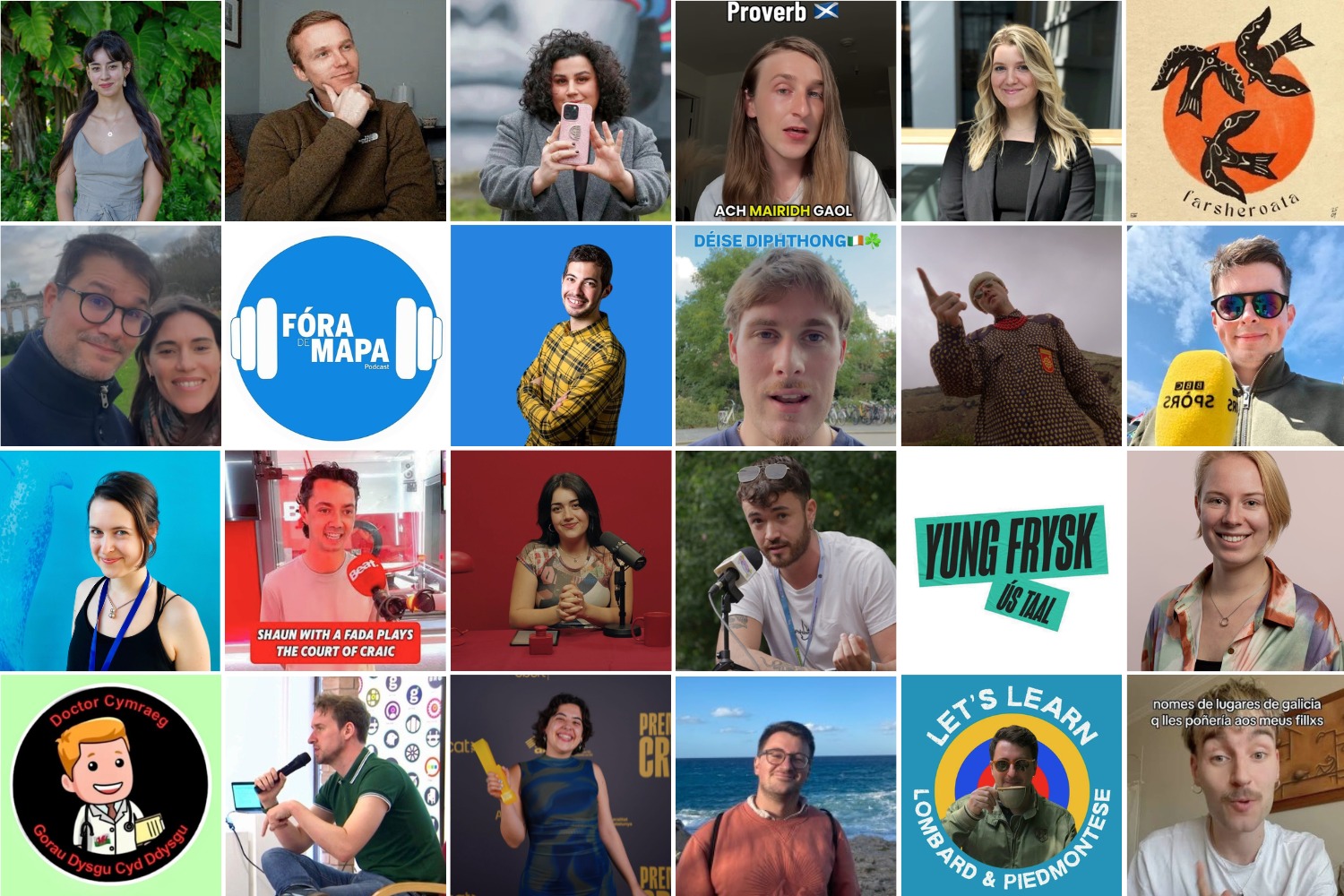
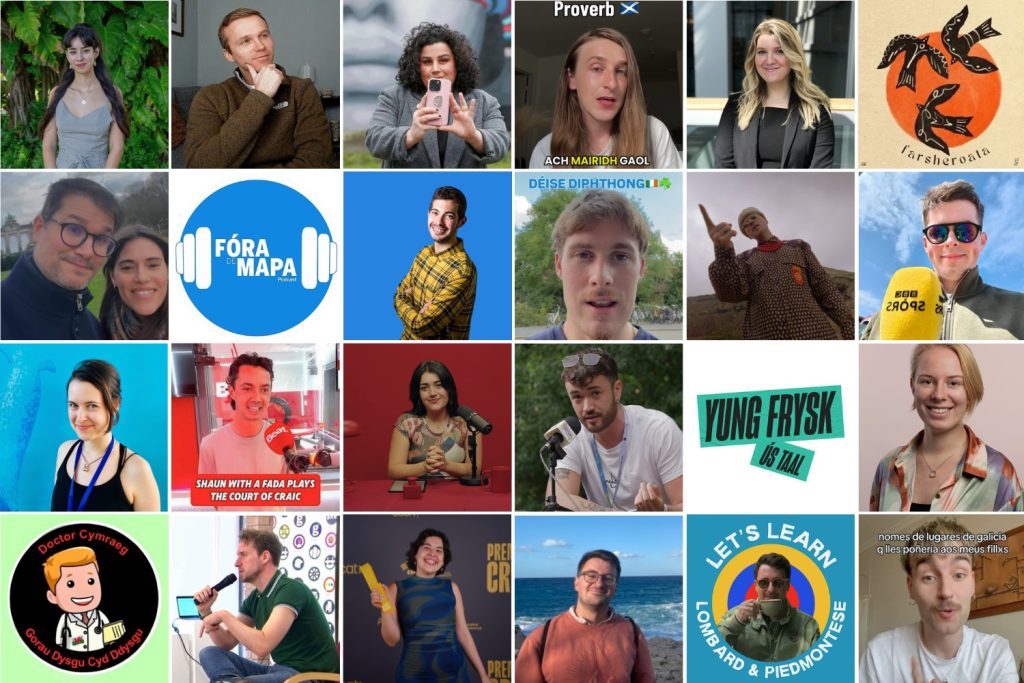
The second part of the study collects the responses of 19 content creators working in 12 European minoritised languages, including Galician, Valencian/Catalan, Basque, Scottish Gaelic, Irish, Welsh, Occitan, Cornish, Aromanian, Lemko-Rusyn, Lombard and Piedmontese. Through a qualitative questionnaire with 19 open-ended questions, participants shared their experiences, motivations, difficulties and perceptions of the role of social media in the vitality of their languages.
This approach allows the report’s conclusions to emerge from the exchange with the creators themselves and from the common patterns identified in their testimonies, rather than presenting an external view of how young people use their languages on the internet. Due to its qualitative nature, the study does not aim to provide generalisable statistical results, but rather to identify shared experiences, trends and learnings across different linguistic communities.
Social media as spaces for the everyday use of languages
One of the main aspects addressed by the report is the ability of social media to create new “breathing spaces” or sociolinguistic domains for the use of minoritised languages, especially among younger generations. Short-form video platforms such as Instagram or TikTok, but also others that allow for more extensive formats such as YouTube or podcasts, enable young people to use their languages in everyday contexts and talk about a wide variety of topics, from culture and entertainment to current affairs, humour or personal experiences. At the same time, this digital presence contributes to expanding the spaces in which minoritised languages can be used and presenting them as fully valid languages for everyday communication and content creation.
Young creators as new linguistic role models
The report also focuses on the role of content creators, highlighting the importance of these profiles in building digital communities in a particular minoritised language, regardless of the number of followers or their reach. These creators become role models for other young speakers, who may choose to follow in their footsteps as they understand that content in their native language also has its own space and audience in the digital sphere.
In this way, and as the report rightly points out, content creation in minoritised languages makes it possible to connect people who share a language and generate new forms of participation and belonging in the digital environment.
From language-related content to the natural use of language
One of the issues running through the experiences analysed is that the normalisation of a language does not necessarily depend on creating content specifically about it. In fact, the report argues that talking about music, sport, video games, current affairs, humour, or any other topic using a minoritised language, can contribute even more to its normalisation, as well as expanding its areas of use and incorporating it naturally into digital life.
A challenge and an opportunity for the future of European languages
The report underlines that the digital presence of minoritised languages continues to face different challenges, related, among other aspects, to reach, available resources and the characteristics of the platforms themselves.
That is why, in this context, supporting young creators and strengthening the digital ecosystems of these languages can be a way of promoting their visibility, use and transmission among new generations.
Speaking to the media the report co-author, Davyth Hicks (ELEN), said: “It was fascinating working on this report to see how important the digital domain has become for young speakers of minoritized languages, and how these relatively new digital language communities have an impact on natural language use. As the report proposes, its now time to ensure that we continue to develop the digital ecosystem so that our languages can thrive online. For example, we need to ensure that algorithms work to direct speakers to each other’s content and help create and sustain digital language communities. Investments in algorithm engineering would meaningfully improve the digital visibility of minoritised languages.”
Co-author Blanca Trull (ELEN) added that: “As a young speaker of a minoritised language and a content creator using that same language, it has been incredibly rewarding to see how many of the realities, challenges, aspirations and experiences I have encountered are shared by other young creators across Europe. Although our languages, communities and personal contexts may be very different, we face many of the same challenges and, ultimately, share the same goal: creating spaces where our languages can be used naturally, seen and heard, and continue to thrive in the digital world.”
The report is a deliverable of the FOSTERLANG project (Fostering Linguistic Capital: A Roadmap for Reversing the Diversity Crisis and Activating Societal Benefits in Europe) which is a European project funded by the European Commission through Horizon Europe that works to protect and promote minoritised languages and strengthen their social, cultural and economic position. The project brings together 14 organisations and different linguistic communities from across Europe.
Read the full report: