
Deliverable 4.1 Gaelic
The Scottish Gaelic case: the Ceòlas Project
Scottish Gaelic (Gàidhlig, or Gàidhlig na h-Alba) is one of Europe’s minority languages, deeply tied to the cultural identity of Scotland’s north-western communities. Despite its official recognition under the Scottish Languages Act 2025, Gaelic remains classified by UNESCO as “definitely endangered.” Community-led initiatives such as Ceòlas, based in South Uist, have become vital in sustaining the language through music, culture, and education.
The Linguistic Landscape of Gaelic
The 2022 Census for Scotland reported that 69,701 people, or 1.3% of the national population, could speak Gaelic. These individuals are, effectively, Gaelic-English bilinguals. Overall, around 130,000 individuals (2.5%) reported having some Gaelic skill such as speaking, reading, writing, or understanding.
Na h-Eileanan Siar (the Western Isles) remains the strongest Gaelic-speaking area, with 57.2% of residents reporting some Gaelic skills, a percentage much greater than the next highest council areas which were Highland (8.1%) and Argyll and Bute (6.2%), both in the north-west of Scotland. However, for the first time in centuries, Gaelic speakers there fell to a minority position at 45%. In all other council areas, fewer than 3% of people aged three and over had some Gaelic skills. Several thousand Gaelic speakers live in the major cities of Glasgow and Edinburgh.
In South Uist, where Ceòlas is based, 57.8% of the population can speak Gaelic, with local figures ranging from 28.7% to 47.6% depending on the area. South Uist is considered the most densely concentrated Gaelic-speaking population globally, yet only 12.1% of residents—mostly aged 50 and above—use Gaelic as their main home language.
Census data over the past forty years show a steady decline in Gaelic speakers among the economically active population. In 1981, 79.8% of Outer Hebrides residents spoke Gaelic; by 2022, this had fallen to 45%. This all serves to indicate that the social use and transmission of Gaelic across the Outer Hebrides is at the point of collapse. This situation is exacerbated by an ongoing demographic crisis, characterised firstly by a diminishing social density of Gaelic speakers; and secondly by a very low level of societal and familial transmission of Gaelic, which results in weak cross-generational practice of vernacular Gaelic. Both these factors are exacerbated by overall population decline.
Census data over the last 40 years show a steady decline in the number of Gaelic speakers amongst the economically active population indicating that without addressing the demographic and economic challenges facing the islands as a matter of urgency a point of no return will be reached in which Gaelic will no longer be capable of sustaining itself as the natural language of the community. Traditional Gaelic-speaking society has been unable to combine socio-economic modernity with continued social vitality of Gaelic language and culture.
It could be argued that the understanding of a Gaelic social economy, in which Gaelic was the language of daily interaction across multiple domains, has been replaced by a risk-laden conception of a ‘Gaelic economy’, in which ‘Gaelic jobs’ (specifically language-related jobs) are seen as key indicators of development while familial language transmission and social discourse declines.
The Ceòlas Project
Founded in 1996 and based in South Uist with support from Pròiseact nan Ealan, Ceòlas began as a week-long music and dance school in South Uist. Over time, it has grown into one of Scotland’s leading Gaelic culture, heritage, and arts organisations, and is a key driver in the island’s social and cultural resurgence and is committed to promoting a vibrant Gàidhlig culture for future generations. The name Ceòlas combines ceòl (music) and eòlas (knowledge or experience), reflecting its mission to celebrate and nurture Gaelic traditions.
Ceòlas promotes traditional music, song, dance, and language, reconnecting them with their Gaelic roots. The organisation offers bursaries or reduced fees for its Gaelic classes which help local and/or younger residents to access language classes. They also maintain strong links with Gaelic communities abroad, particularly in Cape Breton, Nova Scotia, and across the Celtic diaspora. Structurally, Ceòlas is a charitable company limited by guarantee and registered as a Scottish charity.
Positive Impact on the Linguistic Community
Ceòlas has become a cornerstone of Gaelic cultural resurgence in South Uist. Several reports by organisations such as Bòrd na Gàidhlig and Highlands and Islands Enterprise have demonstrated the importance of Gaelic language and culture in creating local, regional and national impact. Locally, initiatives like Cnoc Soilleir, a partnership between Ceòlas Ltd and UHI Outer Hebrides, generate economic opportunities through direct and indirect employment, provide education and skills development for the community, and attract people to Uist to engage in Gaelic learning and cultural activities.
In collaboration with the University of the Highlands and Islands, Ceòlas is developing a new focal building at Cnoc Soilleir, which translates as “the bright hill” in English. This facility is designed to support the educational programmes of UHI North, West & Hebrides, alongside Ceòlas’ artistic programme and community-led activities that promote Gaelic language learning, heritage, music, dance and culture.
The project underpins the growth of Ceòlas, including its renowned Summer School, Fèis Chullaig, Song Conference and Symposium, and provides a vital base for expanding Gaelic language initiatives. The aim is to deliver high-quality cultural events and activities throughout the year, creating excellent training and employment opportunities where Gaelic will be the main language of engagement and interaction.
Ceòlas also plays a key role in supporting an island-centred repopulation zone plan that prioritises Gaelic in the economy and job creation, acting as an anchor organisation for the Uist Gaelic Language Plan.
Looking Ahead
The Scottish Gaelic case demonstrates both the fragility and resilience of minority languages. While census data reveal a worrying decline, projects like Ceòlas show how culture, education, and community engagement can breathe new life into endangered languages. By linking Gaelic to music, dance, and heritage, Ceòlas not only sustains linguistic traditions but also fosters pride, identity, and economic opportunity in South Uist and beyond.
Maps: Scotland’s Census 2022
All map content available under the Open Government Licence v3.0.
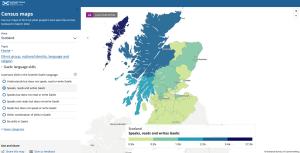
Map 1: Scotland: Speaks, reads and writes Gaelic
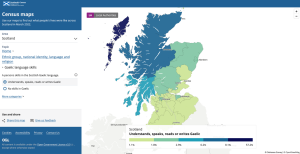
Map 2: Scotland: Understands, speaks, reads or writes Gaelic
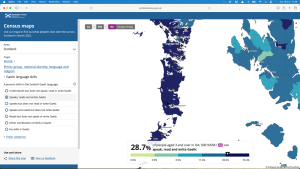
Map 3: Na h-Eileanan Siar Local Authority – Output Areas – South Uist, percentage of people aged 3 and over who can speak, read and write Gaelic in the output area where Ceòlas is based.
Photographs from Ceòlas would be available from their website, for use with permission.
1981 | 1991 | 2001 | 2011 | 2022 | |
Outer Hebrides_SpeaksGaelic | 23278 | 19241 | 15605 | 14092 | 11362 |
Outer Hebrides_DoesnotSpeakGaelic | 5893 | 8665 | 9995 | 12837 | 13846 |
Outer Hebrides_Population3+ | 29171 | 27906 | 25600 | 26929 | 25208 |
Percentage Speaks Gaelic | 79.8% | 68.9% | 60.9% | 52.3% | 45.0% |
Table 1: Percentage of population of the Outer Hebrides (Western Isles) who can speak Gaelic, 1981-2022.
